
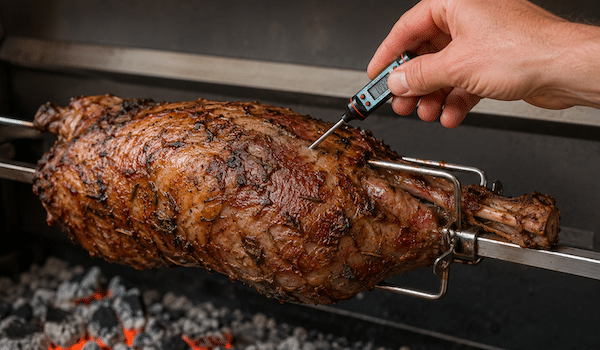
The right spit roast internal temperature is 50–55°C for beef, 55–60°C for lamb, and 60°C for pork. Beef at 50°C is medium-rare — pink, juicy, where most people want it — though some prefer it a touch rarer, and that’s personal preference. Lamb needs a little more heat than beef; too rare and it can be chewy. Pork targets 60°C, or just a fraction under — the rest does the last bit of work. Get a probe. Don’t guess.
We’ve been cooking spit roasts professionally since 2014 — hundreds of events, all three meat types, groups from 30 to 200. In that time, the single most common mistake we see from home cooks is pulling meat off the spit by feel or by colour rather than by temperature. Colour, especially, is unreliable. A big pork leg can look done on the outside and still be raw where it counts. A probe removes that variable entirely.
Why Temperature Matters More Than Time
Cooking times are a guide, not a rule, as temperatures can vary when cooking over open coals. Wind, ambient temperature, coal quality, and how well the meat is balanced on the spit all affect how long it takes.
Temperature doesn’t lie. When the centre of your beef rump reads 57°C, it’s at 57°C — regardless of what time you started cooking or what the outside looks like. That’s why we always use a probe, and why we’d always recommend you do too.
Temperature Guide: Beef, Lamb, and Pork
Here’s what we use at every Dizzy Spit Roasts event. These are our target temperatures — tested and refined over years of large-scale catering:
| Meat | Target range | Pull off at | Notes |
|---|---|---|---|
| Beef rump | 55-60°C | 50–55°C | Medium-rare to medium. Some people like it a touch rarer — that’s personal preference |
| Boneless lamb leg | 60°C | 55-60°C | Lamb needs a little more than beef — too rare and it can be chewy. A touch of pink is fine; raw in the centre isn’t |
| Boneless pork leg | 60°C (or a fraction under) | ~57°C | 60°C is the sweet spot. Pull it just shy of 60°C and the rest carries it there |
A note on carryover cooking: meat keeps cooking after it comes off the spit. During a proper rest, the internal temperature can climb by up to 5°C. We factor that in, which is why the “pull off” temperatures above are lower than the final target. If you’re chasing 55°C for beef, pull it at 50°C and let the rest do the last leg of the work.
How to Use a Meat Thermometer Correctly
Placement is everything. Insert the probe into the thickest part of the meat — away from the spit pole, away from any bone, and away from fat pockets. Bone conducts heat differently from muscle and will give you a falsely high reading. Fat pockets do the same.
For a boneless leg of lamb or pork, aim for the dead centre of the thickest section. For a beef rump, the thickest point is usually away from the flat cap end — probe in from the side rather than straight through.
Check the temperature at least 30 minutes before you expect the meat to be ready. If it’s climbing fast, you may need to manage the heat by moving the meat farther from the coals. If it’s stalling, you might need to add heat by lowering the meat. Either way, you want to know early — not when you’re five minutes from eating time.
Tip: If your meat reaches the temperature early, it’s better to take it off right away and rest it for longer, rather than leaving it on, as it will overcook. While your meat is a whole piece and covered in foil, it will stay warm.
What Happens If You Go Over Temperature
Overcooked spit roast is a real thing, and it’s a shame when it happens. Here’s what to expect at each stage beyond the target:
Beef over 60°C: You’re heading into medium-well territory. The juices that were trapped in the muscle fibres start to escape, and the texture becomes noticeably drier. Past 65°C and you’re well-done. Once you’re past 70°C, nothing will bring it back.
Lamb over 65°C: Similar to beef — the distinctive flavour is still there, but the texture suffers. Lamb has a bit more fat running through it, which gives you a slightly wider margin, but pushing past 65°C still costs you moisture.
Pork over 65°C: The meat starts drying out. Pull the pork at 60°C and rest it. If you’re chasing crackling, our guide to spit roast pork crackling covers the prep and cooking technique in detail.
Resting: The Step People Skip
Once the meat hits temperature, it needs to rest before you carve it. This isn’t optional — it’s part of the cooking process. Cutting into a joint straight off the spit sends all the juices running out onto the carving board rather than staying in the meat where they belong.
We prefer a full 30-minute rest. We get it — hungry guests don’t always make that easy — so 20 minutes is the minimum we’d recommend. For all meats, the method is the same: lift the joint into a tray and cover it with foil.
Remember: the temperature continues rising during the rest, up to 5°C. That’s not a problem if you’ve pulled the meat at the right point. It’s actually doing the final work for you. The muscle fibres relax, the juices redistribute, and when you carve, you get clean slices, not a pool of liquid on the board.
Frequently Asked Questions
What temperature should a spit roast be for beef?
55-60°C is our range — medium-rare to medium. Some people like it a touch rarer than that, and that’s personal preference; we cook to brief. We pull beef at 50°C and rest it for 20–30 minutes — the carryover heat (up to 5°C during the rest) brings it to the target without overshooting. Past 65°C and you’re into well-done territory, which isn’t what most people want from a rotisserie beef rump.
What temperature should spit-roasted pork be?
60°C — or a fraction under. Pull the pork at around 57°C, and the rest carries it to around 60°C (carryover cooking adds up to 5°C during a proper rest). 60°C gives you a safe, tender result. Pushing past 65°C dries it out quickly, so keep an eye on the probe in the last 30 minutes of cooking.
Can I rely on cooking time instead of a thermometer?
You can use time as a rough guide, but we wouldn’t rely on it alone. Coal temperature, ambient conditions, wind, and how well the meat is balanced all affect cooking time. A probe gives you a definitive answer. For any large joint — especially pork — we’d always recommend checking temperature rather than going by the clock.
Where do I insert the probe in a spit roast?
Into the thickest part of the meat, away from the spit pole, any bone, or fat pockets. Those three things all affect the reading — bone and fat conduct heat differently than muscle and will give you an inaccurate number. For a boneless leg, aim for the geometric centre of the thickest section. Check from the side rather than straight through if possible.
How long should I rest a spit roast before carving?
We prefer 30 minutes — and we’d always push for that if the crowd can wait. 20 minutes is the minimum. For all meats, rest in a tray covered with foil: the tray catches the juices and the foil keeps the heat in. During a good rest, the internal temperature rises by up to 5°C and then stabilises, the fibres relax, and the juices redistribute. Don’t skip it — it’s the difference between clean slices and a wet carving board.
Want to get the full picture on tspit roast technique? Our 10 tips for a perfect spit roast covers everything from coal prep to carving — it’s a good read before your first cook. And if you’re thinking about having us cater your next event, get in touch with your date and guest count. You can also check our Google Reviews to see what recent clients have said.

