
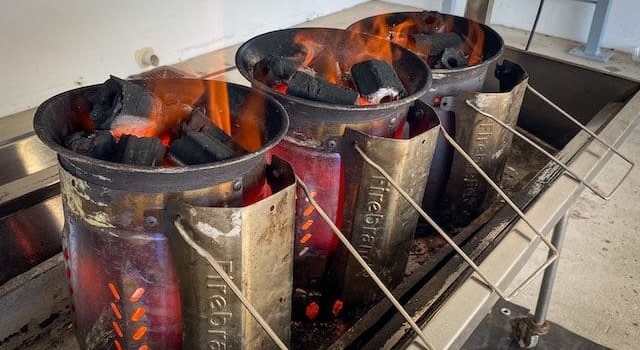
To light a charcoal spit roast, fill a chimney starter with quality lump charcoal, light a fire starter underneath, and wait until the top coals are covered in a grey ash coat — roughly 20–30 minutes. Then tip them into your charcoal tray and spread evenly. That’s the process. Done right, you’ll have consistent, manageable heat from the first rotation to the last.
Getting the coals right is where a good spit roast actually starts. You can have the best meat in the world, perfectly seasoned and balanced on the spit — but if your charcoals are not hot enough when the meat goes on, you’re fighting a losing battle from the beginning. Here’s exactly how we do it.
Why Charcoal and Not Gas
We cook on charcoal only. Not gas. We just love that smokiness flavour that it adds to the meat.
Gas is convenient. It lights instantly, the temperature is controllable with a dial, and you don’t need to manage anything. But convenience isn’t the goal here — the result is. Charcoal generates radiant heat from the coals themselves, not a flame. That even, dry heat is what builds the crust and depth of flavour on the outside of the meat that a gas burner simply doesn’t produce at the same level.
We’ve written more on the comparison in our gas vs. charcoal spit roast guide if you want the full breakdown. The short version: charcoal wins on flavour, every time.
What You Need Before You Start
You don’t need a lot of gear. What you do need, you should have ready before you touch a match:
- Quality lump charcoal — not briquettes if you can help it. Lump charcoal lights faster, burns cleaner, and produces less ash. We’ve covered our charcoal recommendations in detail in our guide to the best charcoal for spit roasts.
- A chimney starter — the single most useful tool for lighting BBQ charcoal.
- Fire starters — any will do, we use Red Heads brand.
- Heat-resistant gloves — when you tip the chimney, the handle gets hot. Don’t find this out the hard way.
- Long-handled tongs — for spreading and adjusting coals once they’re in the bed.
Step-by-Step: Lighting the Coals
Step 1: Fill the chimney. Load the chimney with lump charcoal or hex briquettes. Fill it with as much as you will need for what you are cooking. I like to be quite generous, as too much is always better than not enough.
Step 2: Place 2-3 fire starters underneath. Sit the chimney on a grate or fireproof surface. Put the fire starters under the chimney’s grate and light them. The chimney design draws air up through the bottom and accelerates the burn — you don’t need to do anything except let it work. To speed up the process, you may want to add a few more firelighters as the first lot is burning out.
Step 3: Wait for the ash coat. This is the step people rush. The coals are ready when the top layer shows a consistent grey ash coat and flames out of the top of the chimney. This usually takes 20–30 minutes, depending on conditions.
Step 4: Tip the charcoal into the charcoal tray. With heat-resistant gloves on, tip the chimney into your spit roast’s charcoal tray or firebox. The coals will still be actively glowing — handle the chimney carefully and tip steadily.
Spreading and Positioning the Coals
Use long-handled tongs to spread the coals in a single, even layer under where the meat will sit. If you’re cooking a large joint that covers most of the spit, the charcoal should cover the same length. For smaller pieces, you can concentrate the heat slightly.
Frequently Asked Questions
How long does it take to light coals for a spit roast?
Using a chimney starter, around 20–30 minutes. The variable is ambient temperature and wind — on a windy day, it can take a little quicker. Wait until the top coals show a solid grey ash coat before tipping them out. Rushing this step and using underlit coals leads to temperature inconsistency throughout the cook.
Can I use lighter fluid to light my coals?
Don’t. Lighter fluid can leave a chemical taste in the meat, especially early in the cooking process, before it fully burns off. A chimney starter with a natural fire starter underneath is faster, cleaner, and produces no off-flavours. It’s also safer — no flash-lighting, no flare-ups from pouring fluid onto hot coals.
How much charcoal do I need for a spit roast?
For a two to three-hour cook, plan on filling the chimney at least twice — once to start and once to top up around the halfway mark. The exact amount depends on your spit size and the meat you’re cooking. A larger coal bed (for a bigger joint) burns through more charcoal. It’s better to have more than you need than to run short mid-cook.
What’s the difference between lump charcoal and BBQ briquettes for a spit roast?
Lump charcoal is natural hardwood that’s been carbonised — it lights faster, burns hotter and cleaner, and produces less ash than briquettes. BBQ briquettes are smaller in size and burn longer at a lower temperature. They also contain a chemical to keep them burning, which can affect the taste of your meat. For a rotisserie spit roast, we prefer lump charcoal or hex briquettes every time. See our full charcoal guide for more details.

